
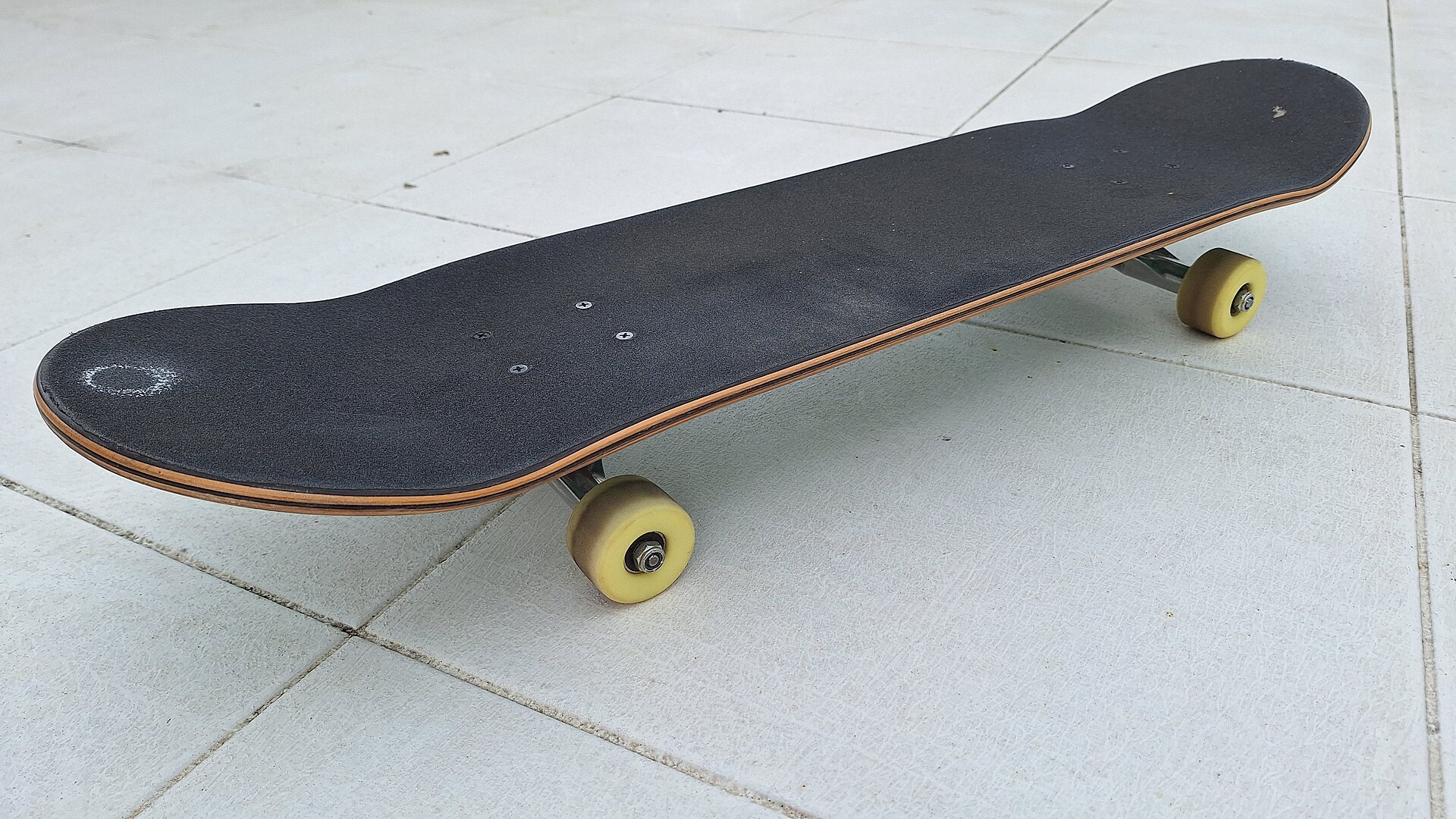
Almost every deck on a shop wall is built the same way: seven thin sheets of hard maple, glued together and pressed into shape. The differences are in the details.
The wood
Hard rock maple from North America is the standard because it is dense, springy and holds its shape. The plies alternate in grain direction. Most run nose to tail, and two run side to side to stop the board twisting.
The glue and the press
The glue matters as much as the wood. Stiffer glues give a board more pop and keep it for longer. The stack is then pressed in a mould that sets the concave and the kick of the nose and tail. Boards pressed one at a time tend to be more consistent than boards pressed in a stack.
Reinforced decks
Several brands add fibre layers to make a board thinner, lighter or longer lasting. Powell Peralta’s Flight decks and Santa Cruz’s VX line are two examples. They cost more than standard maple, and many skaters find they keep their pop for longer.
Why decks wear out
Pop fades as the wood fibres break down and the board soaks up moisture. Chipped noses and tails, pressure cracks near the trucks and a soggy feel are the signs it is time for a new one.
Photo: Cynroya, CC0, via Wikimedia Commons

Leave a Reply